
Classic Red Velvet Cake
Red velvet is not a chocolate cake with colouring in it. It is its own thing: a small amount of cocoa, buttermilk for tang and softness, and a little vinegar and bicarbonate of soda working together to keep the crumb light. Get those right and the colour is the easy part.
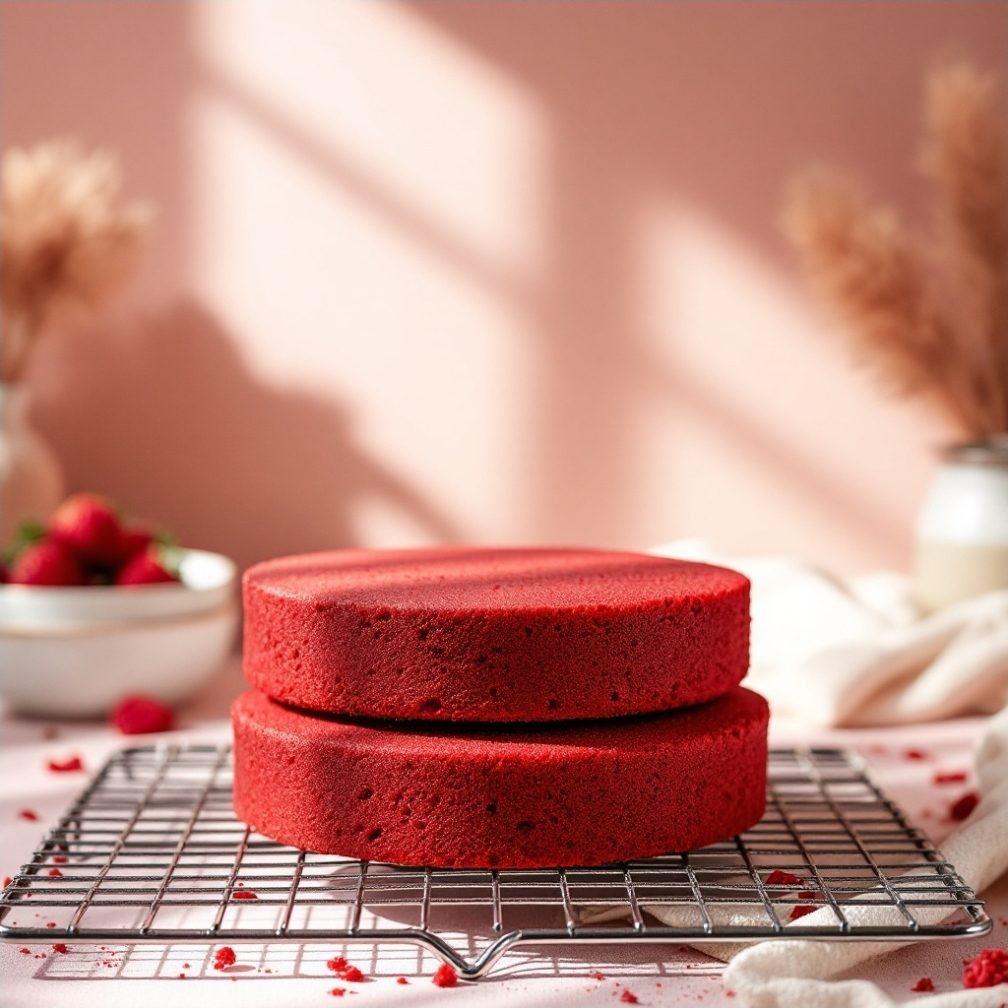
- Prep time
- 20 minutes
- Bake time
- 28 to 32 minutes
- Total time
- About 2 hours including cooling
- Makes
- Two 20cm (8 inch) layers, about 12 to 16 slices
- Difficulty
- Beginner
Ingredients
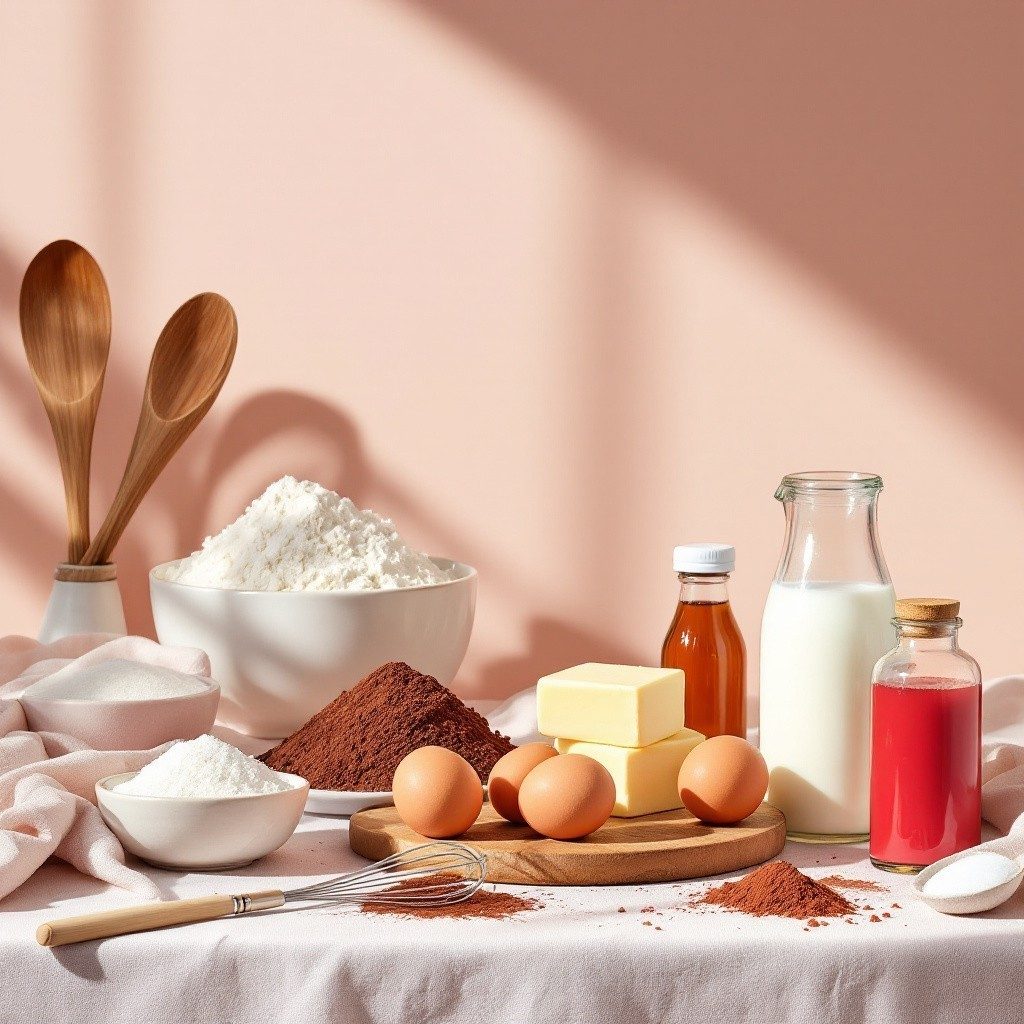
- 300g plain flour
- 20g cocoa powder
- 300g caster sugar
- 1 tsp bicarbonate of soda
- 1 tsp fine salt
- 2 large eggs, at room temperature
- 240ml buttermilk, at room temperature
- 240ml flavourless oil, such as sunflower
- 2 tsp vanilla extract
- 1 tbsp white vinegar
- Red gel food colouring, about 2 tsp, or to the shade you want
Equipment
- Two 20cm (8 inch) round cake tins
- Baking parchment
- Digital kitchen scales
- Large mixing bowl and whisk
- Sieve
- Wire cooling rack
Method
- Heat the oven to 160°C fan / 180°C conventional / gas mark 4. Grease two 20cm tins and line the bases.
- Sift the flour, cocoa, sugar, bicarbonate of soda and salt into a large bowl and whisk to combine.
- In a jug, whisk the eggs, buttermilk, oil, vanilla and the colouring until the liquid is an even, strong red. Colouring the liquid first gives a far more even result than adding it to the batter.
- Pour the wet into the dry and whisk just until smooth. Stop as soon as there are no dry patches.
- Add the vinegar and fold it through quickly. It reacts with the bicarbonate of soda straight away, so get the cake into the oven now.
- Divide between the tins and bake for 28 to 32 minutes, until the centre springs back and a skewer comes out with a few moist crumbs.
Cooling
Cool in the tins for 10 minutes, turn out and cool completely on a wire rack. Red velvet is a soft, oil-based cake and it will tear if you move it warm. Frost only when it is cold: cream cheese frosting in particular will slide straight off a warm cake.
Storage
Un-iced layers keep 3 days wrapped at room temperature or 3 months frozen. If you use a cream cheese frosting, the finished cake must be kept in the fridge and eaten within 3 days. Take it out an hour before serving.
KKD baking tips
- The cocoa is there for flavour, not colour. Twenty grams is right. Add more and you have a chocolate cake; leave it out and the cake tastes flat.
- Use gel colouring, not liquid. Liquid colouring needs so much to reach a deep red that it thins the batter and can leave a bitter aftertaste. A gel gives you the shade with a couple of teaspoons.
- Colour the wet ingredients, not the batter. Streaks are almost impossible to mix out later without overworking the cake.
- Buttermilk is doing real work. Its acidity tenderises the crumb and reacts with the bicarbonate of soda. If you cannot get it, stir 1 tbsp of lemon juice into 240ml of milk and leave it 10 minutes.
- Mix as little as possible. This is the difference between velvet and dense.
Common mistakes, and how to fix them
- Dry or dense: overmixed, overbaked, or the flour was scooped rather than weighed. All three are common and all three are avoidable.
- Brownish rather than red: too much cocoa, or liquid colouring that was not strong enough.
- Sunk: the batter sat around after the vinegar went in. Bake it straight away.
- Frosting sliding off: the cake was still warm.
Serving suggestions
Traditionally paired with a cream cheese frosting, but it is also lovely with Basic Vanilla Buttercream if you want something that sits happily at room temperature for longer.