
Homemade Cake Release
Cake release, sometimes called cake goop or pan release, is a paste of equal parts flour, oil and solid fat that you brush inside a tin instead of greasing and lining. It is one of those small kitchen habits that quietly removes a whole category of problem, and it costs almost nothing.
- Prep time
- 5 minutes
- Bake time
- No cooking
- Total time
- 5 minutes
- Makes
- About 250g, enough for roughly 20 tins
- Difficulty
- Beginner
Ingredients
- 80g plain flour
- 80g vegetable shortening, at room temperature
- 80ml flavourless oil, such as sunflower
Equipment
- Small bowl
- Electric hand mixer or a whisk and some patience
- Silicone pastry brush
- Clean airtight jar or tub
Method
- Put the flour, shortening and oil in a bowl.
- Beat for 2 to 3 minutes until completely smooth, with no lumps of flour and no streaks of oil. It should look like a soft, pale paste, roughly the consistency of thick double cream.
- Transfer to a clean, dry airtight jar.
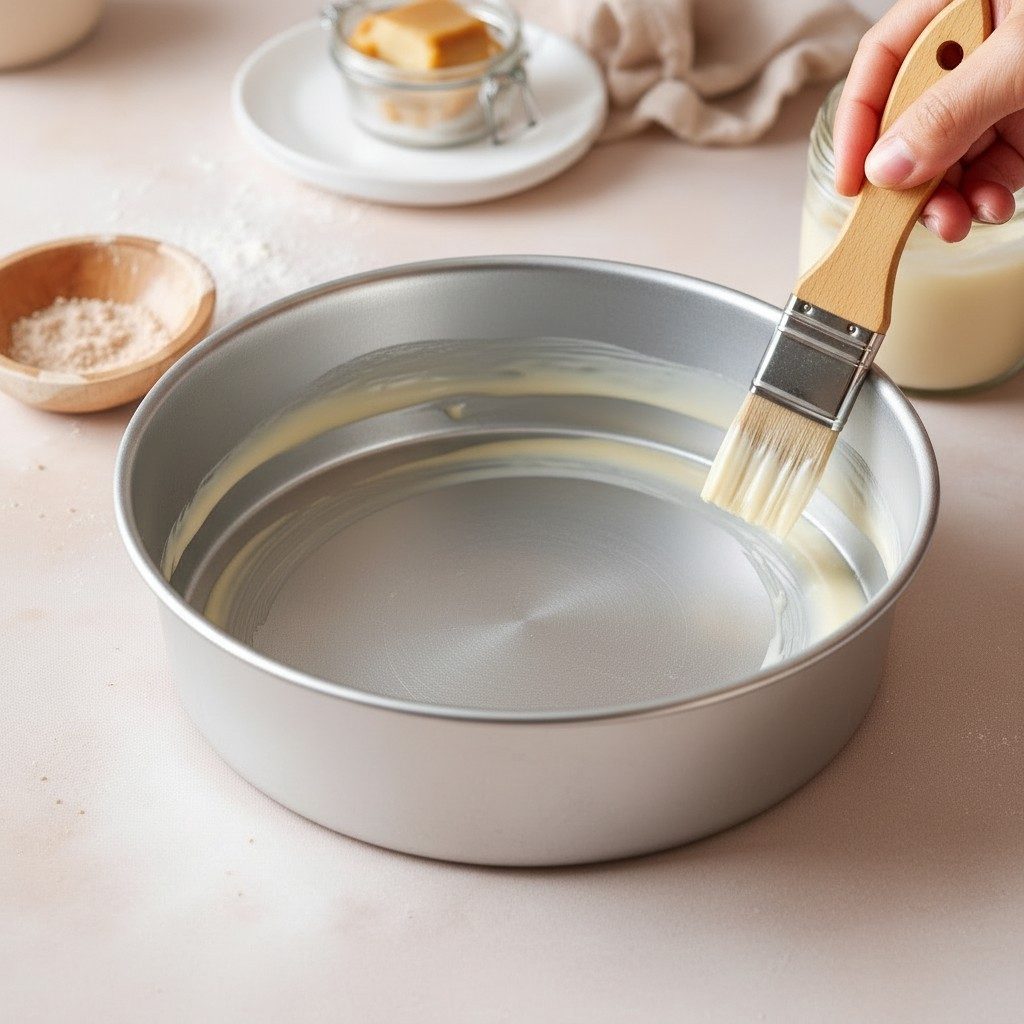
- To use: brush a thin, even layer over the inside of the tin, base and sides, with a silicone pastry brush. Thin is the word: a thick layer can fry against the tin and leave a pale gummy patch. There is no need to grease, flour or line the tin as well.
Storage
Keeps in an airtight container for up to 3 months in the fridge, or about 4 weeks in a cool, dark cupboard. It may firm up in the fridge; let it come back to room temperature and stir before use.
Food safety
This contains raw flour and fat and is not for eating. Raw flour can carry bacteria, so treat it like any other raw ingredient: use clean, dry utensils, never dip a used brush back into the jar, keep the lid on, and wash hands and equipment after handling it. Label the jar with the date you made it. If it smells rancid or sour, or looks or feels different from when you made it, throw it away and make another batch: it takes five minutes.
KKD baking tips
- Equal parts by weight is the easy way to scale it. Halve it, double it, it works the same.
- Use a silicone brush, not bristles. Bristles shed and they hold the paste.
- Get into the corners of square and novelty tins, which is exactly where cakes stick.
- It works on bundt and shaped tins, which is where it really earns its place.
- Still line the base for very delicate or very wet cakes if you want belt and braces. For everyday sponges you will not need to.
Common mistakes, and how to fix them
- Cake still stuck: the layer was too thin, or the tin was not fully coated. Every part of the surface needs covering.
- Gummy patches on the crust: the layer was too thick.
- Separated in the jar: normal after a few weeks. Stir it back together. If it will not come back together, make a fresh batch.